
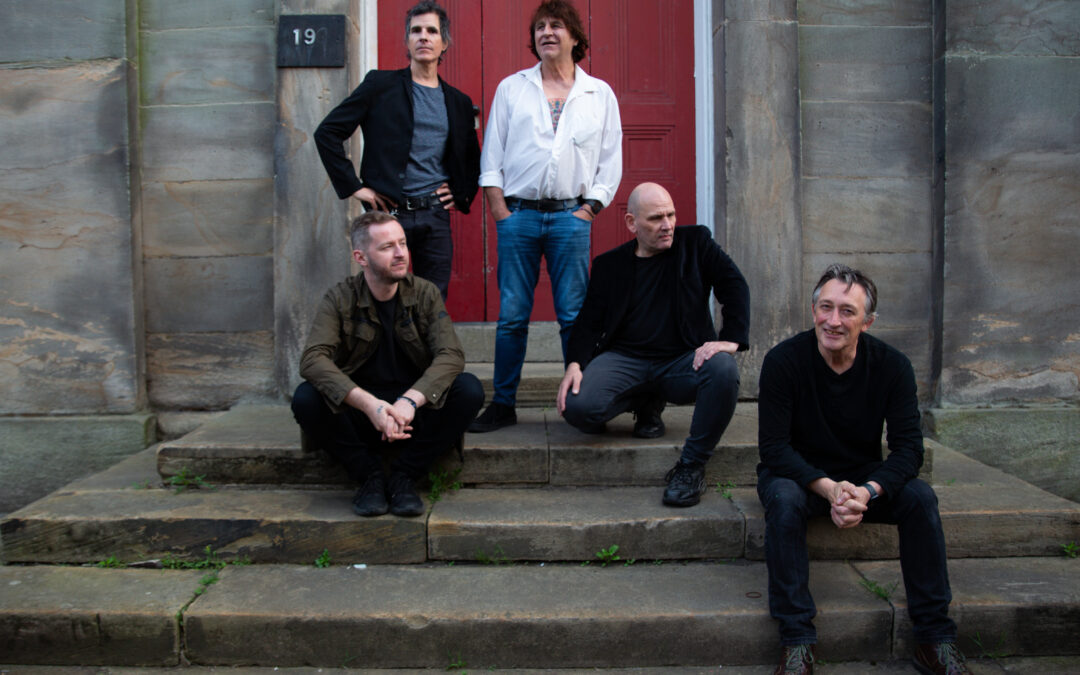
(The Chameleons play Richmond Music Hall on Monday, April 20. Photo by Helen Millington.)
By Jeff Maisey
By age 21, in 1983, I had absorbed the music of The Beatles as a kid influenced by teenagers on the dead end street I was raised on.
From this impressionable point I was on to early ‘70s glam rock albums by T-Rex, David Bowie, and Alice Cooper.
By my freshman year in high school, British punk rock was the next obvious progression with bands like the Sex Pistols, Clash, and Siouxie & The Banshees capturing my imagination.
The western music world was exciting with genre variations seemingly changing from week to week.
Just down the street from the university I was attending in Norfolk, the independently-owned Lot Records was a highly cherished source for new music as commercial radio stations elected not to air a program format for what was then dubbed college rock or alternative rock, and the days were long before the internet existed for consumers.
Mary Walter, the co-owner of the record store, waved me over to the counter as soon as I walked in the door one afternoon.
“Jeff, we just got this record in and you’ve got to hear it,” I remember her saying.
The album was “Script of the Bridge,” the full-length debut recording by The Chameleons.
The guitars created a cathartic aural soundscape driven by an unrelenting bass and enhanced all the more by a lead vocal of simultaneous beauty and beast, aggressive frustration and melodic passion. Songs like “Don’t Fall,” “Second Skin,” and “Up the Down Escalator” were absolutely riveting. Others such as “Less Than Human” and “View From a Hill” were dreamy, spellbinding and hypnotically beautiful.
I’d never heard anything like it, and that was the point.
“We knew we didn’t want to sound like anybody else,” said Vox (born Mark Burgess) in a recent phone interview with Veer Magazine “If we did anything that reminded us of something else we usually abandoned it. It was conscious.”
Interestingly, the unique, layered sound of The Chameleons predated “Script of the Bridge” by a year.
“When we started working with Steve Lillywhite on “In Shreds” that’s when the sound really started to develop,” Vox said.
The initial single was released in 1982, but their label dropped them soon after its release. It was later re-released as a 12-inch EP with “Less Than Human” as the B-side in America.
Following the release of critically acclaimed albums “What Does Anything Mean? Basically” (1985) and “Strange Times” (1986), the members of The Chameleons stayed active with various recording and touring projects as well as releasing acoustic albums of reimagined older tunes and fresh ideas.
Fast-forward to 2025, The Chameleons, with original members Vox (vocals, bass) and Reg Smithies (guitar) joined by Todd Demma (drums), Stephen Rice (lead guitar) and Danny Ashberry (keyboards), issued its first studio album of new material in 24 years, and what a record it is.
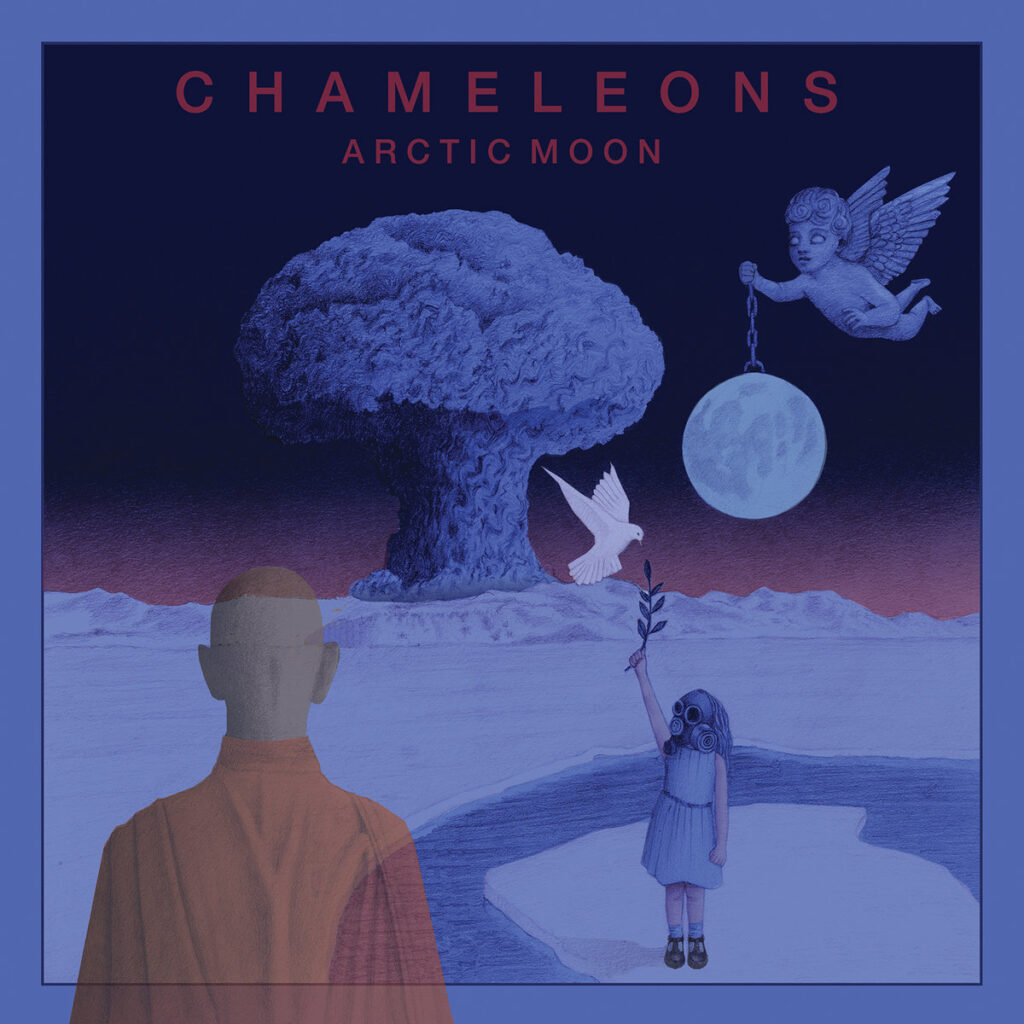
“Arctic Moon” rivals the brilliant songwriting quality of “Script of the Bridge.” There is diversity in dynamics and its trademark lush sound, and yet each of the seven tracks compliments the other for a cohesion Chameleons fans can appreciate.
Lyrically, Vox’s approach hasn’t changed in all these years.
“It’s always been the same,” he said. “From the forefront it’s always been a feeling of alienation, a detached perspective from things.
“But really they’re all derived from my own experiences,” Vox continued. “Observations, thoughts…anything can spark an idea.”
Such observations are most certainly reflected on the track “Saviours Are a Dangerous Thing” as well as “Feels Like The End of the World.”
“Saviours” was the second single released from “Arctic Moon.” The uplifting song has a brilliant, hooky chorus that screams for radio play.
“The initial idea of it came from Stephen,” shared Vox. “I had a couple ideas for it. The theme is very much what was going on at the time, which was the first seven months of Donald Trump’s presidency.”
“It was the last track we finished for the record,” continued Vox.
While Vox and Reg Smithies have been the core songwriters over the years, the newer band members are encouraged to contribute and collaborate.
“For it (“Saviours Are a Dangerous thing”) to turn out the way it did it gave him (Rice) a lot of confidence and made him feel, like , ‘Yeah, I’m one of these guys.’”
Another outstanding track on “Arctic Moon” is “Where Are You?” The Chameleons come out swinging from note one, and it has an ear-turning dynamic change at the 3:00 minute point where the guitar riff drives it home.
“It was an idea Reg had from his garage band — it was just that main riff,” explained Vox. “As soon as I heard that I thought if there’s going to be a first single it’s got to be that.
“I had a piece I’d been trying to do something with and so when we were arranging the song I thought that (idea) could drop it there nicely. It’s the change you’re talking about.”
The Chameleons have always been keen on including brilliantly composed deep tracks, and “Magnolia” is one of those unsuspecting masterpieces demanding the listener to hit the repeat button over and over. After the repeating words “I love you/My soul is dead without you” at the 4:57 point in the song that lyrical emotion switches gears and is amazingly reflected in the melodiousness of the two guitar parts.
“That was one of the ones I brought to the (recording) project,” Vox said. “I pretty much had it in my head. It was Stephen who said why don’t we take the bridge in the middle and just build on that. Once that fell into place it all fell into place. I love the way Stephen and Reg play on it, and it’s a very personal piece for me.”
Vox’s falsetto at the beginning recalls the voice of David Bowie on “Blackstar,” something he said was not conscious.
On the following track, “David Bowie Takes My Hand,” the opening notes and vibe seem to musically reference the Star Man’s “Space Oddity.” The piece is dreamy and almost psychedelic.
“We weren’t sure what to call it so we gave it a working title, and because of that ‘Space Oddity’ vibe we called it ‘David Bowie,’ but then I had an experience in Berlin where I was in a really dark place. During that experience I was listening to music in the hotel room — and I was really down — and ‘Rock and Roll Suicide’ came on my headphones. It was the case of the right song at the right time. I got so much from that it got me through.
“So when I got back we were talking about titles…I said it should be ‘David Bowie Takes My Hand’ because at the end of ‘Rock and Roll Suicide’ he’s singing, ‘Give me your hand,’ and that really struck a chord with me. I felt like I was being lifted out of this dark place.
“The song is about the 48 hours I spent in Berlin and I was in absolute despair,” Vox continued.
Every once in a while a band will compose a song that develops in such a way the listener realized midway through the brilliance of the arrangement. “Free Me” is a lovely example.
“I started to write it on acoustic guitar but I wasn’t quite sure we could make it work,” said Vox. Vox (playing guitar) along with members Stephen (who got on the drums) and Danny (strapped on the bass) recorded a rough demo to save the idea.
“As I’m sitting there I’m thinking just the way they’re playing on it it just has a real ‘Honkey Dorey’ vibe to it,” said Vox. “So that’s the direction we took with it. We kept it minimal and put a piano on it, and it would have a completely different feel that what we normally do in the spirit of that 1972 period. That’s how that came about.”
The overall flow on “Arctic Moon” is a fascinating aural journey. The song “Feels Like The End of the World,” with its lush string sounds, Verve-esque swing (think “Bitter Sweet Symphony”), and frolicking vocal melody, is another captivating moment.
When asked if the end of the world feels near, Vox said the following: “Yeah. It feels like we’re as close as it’s ever been.”
In the meantime, on Monday, April 20, The Chameleons return to Richmond to play the Richmond Music Hall/Capital Ale House. Doors open at 7:00 PM.
Go experience The Chameleons.