
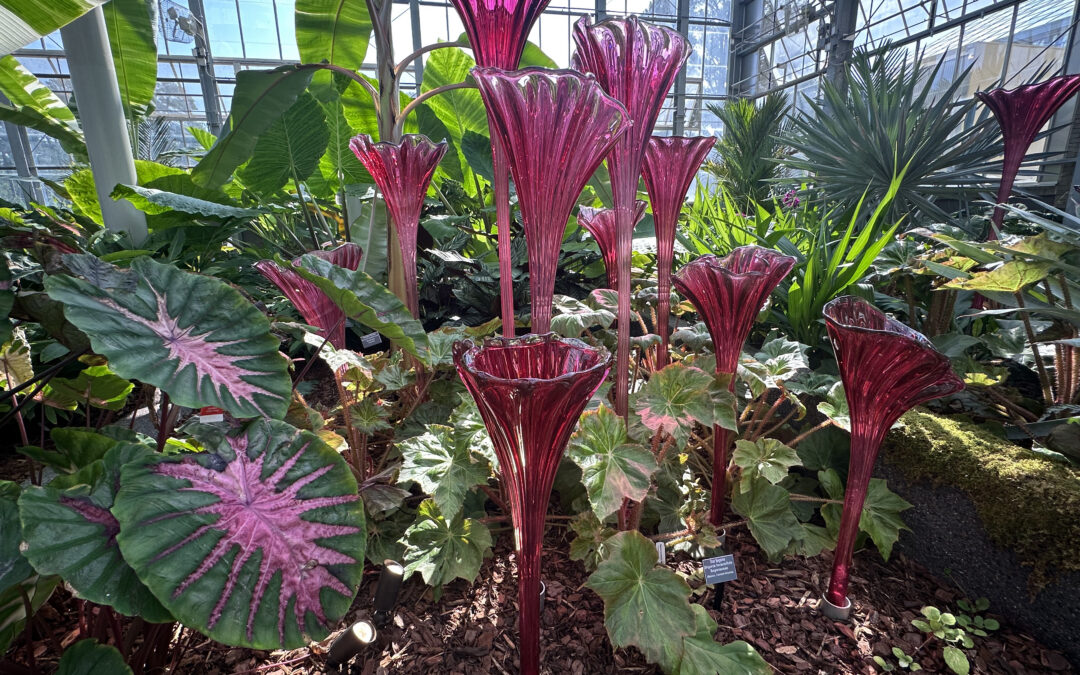
(Dale Chihuly’s “Paradise Pink Trumpet Flowers” pair with the tropical plant species inside the Perry Conservatory.)
By Jeff Maisey
In early September I had an enjoyable tour of Norfolk Botanical Garden‘s impressive “Garden of Tomorrow,” a two building experience where newly commissioned, plant-inspired Dale Chihuly glassworks coexist with a rainforest of rare (near extinct) plant-life and arid, desert species. This new experience opens to the public September 12.
Located at the rear of the parking lot is the Brock Entry Pavilion, a contemporary building designed by Dills Architects of Virginia Beach. The various materials used in the structure are rooted in sustainability and purposeful reuse.
Half of the ground floor space is dedicated to The Reeds Bistro, upscale and trendy in appearance with organic texture and color schemes. One design element of particular interest are the plentiful, various sized light fixtures hovering over the bar that not only resemble mushroom heads, but are actually made of dried fungi.
For vegetarians, I’m told, the bistro will add to the Garden of Tomorrow experience with creative culinary fare leaning towards a plant-based menu offering for breakfast, lunch, and special events.
The Reeds Bistro takes its name from the Chihuly installation work at the entry called “Turquoise Reeds on Logs.”
From the Brock Pavilion its a short stroll to the large glasshouse structure dubbed the Perry Conservatory.
The Conservatory features two spacious “rooms”: Arid House and Tropical House.
Visitors are first routed through the Arid House and, as you might suspect, encounter a variety of desert plants grounded in a soil of pebbles.
The “star” of the Arid House is the magnificent “Opal and Primrose Spire Towers” glasswork designed and created by Chihuly Studio in Seattle in 2024 before being shipped and assembled onsite in Norfolk. The grand artwork sits perched upon the top of a mound with a variety of cacti and succulents positioned hillside.
Also in the Arid House is Chihuly’s glass ceiling suspended installation titled “Chiffon Sangria Azalea Chandelier,” taking inspiration from the history of Norfolk Botanical Garden and the African-American women who labored to establish the attraction in the 1930s.
“This piece really connects the dots to our past, present, and future,” said Kelly Welsh, NBG’s Chief Marketing Officer.
It also incorporates all of the colors of azaleas within the exterior garden.
Most of the artwork for The Garden of Tomorrow has been created within the past two years specifically for this project. Chihuly’s create team of glass designers visited Norfolk, photographed azaleas and other plants so the numerous hanging garden glassworks would match the colors of the native species of Norfolk Botanical Garden.
“Everything was done with intension,” said a spokeswoman of Chihuly Studios.
This includes glassworks in the Tropical House which dangle from the rafters, float in a central pool of water, and are strategically positioned to complement the purplish-pink plant life such as Redemption Elephant Ears, Bromelaid Neoregelia, and Star Begonia.
Also in the Tropical House are species that require hand/human pollination for survival as their only natural pollinators have gone extinct. One such plant on display is the tiny Vulcan Palm, native to the high cliff sides of Hawaii.
The Garden of Tomorrow was funded entirely by donors. A published list on the high end includes the Perry Family Foundation and Joan and the late Macon Brock at the $11+ million level.
Both the Perrys and Brock family have been generous supporters of the arts, and by aiding this unique project showcasing new works by Dale Chihuly — considered one of the most innovative and iconic figures in contemporary art — with unique to the Botanical Garden plant species, the future of the Garden is rejuvenated for generations to come.